


Hey there! As a supplier of Universal - type Cutting Machines, I often get asked about the cutting accuracy compensation method. So, I thought I'd share some insights on this topic.
First off, let's understand why cutting accuracy compensation is so important. In the world of cutting machines, precision is key. Whether you're using a Packaging Cutting Machine for packaging materials, an Advertising Graphics Cutting Machine for creating eye - catching graphics, or a Bag Luggage Sample Cutting Machine for making luggage samples, any deviation from the desired cutting path can lead to wasted materials, lower product quality, and increased costs.
There are several factors that can affect the cutting accuracy of a Universal - type Cutting Machine. Mechanical wear and tear is one of the most common culprits. Over time, the moving parts of the machine, such as the belts, gears, and bearings, can experience friction and wear, which can cause the cutting head to deviate from its intended path. Temperature changes can also have an impact. Different materials expand or contract at different rates depending on the temperature, and if the machine isn't calibrated properly, this can lead to inaccurate cuts.
Now, let's dive into the cutting accuracy compensation methods.
1. Software - based Compensation
One of the most effective ways to compensate for cutting inaccuracies is through software. Modern Universal - type Cutting Machines are equipped with advanced control software that can adjust the cutting path in real - time. The software uses algorithms to analyze the cutting data and make corrections on the fly. For example, if the machine detects that the cutting head is deviating to the left by a certain amount, the software can adjust the path to compensate for this deviation.
This type of compensation is highly flexible and can be customized according to the specific requirements of the cutting job. You can input parameters such as material type, thickness, and cutting speed into the software, and it will calculate the appropriate compensation values. Software - based compensation also allows for easy integration with other systems, such as CAD/CAM software. This means that you can import cutting designs directly from your design software and the machine will automatically adjust the cutting path to ensure accuracy.
2. Mechanical Adjustment
In addition to software - based compensation, mechanical adjustment is also an important part of the cutting accuracy compensation process. This involves physically adjusting the components of the machine to ensure that they are in the correct position. For example, if the belts on the machine are loose, they can cause the cutting head to move unevenly. By tightening the belts, you can improve the stability of the cutting head and reduce the chances of inaccuracies.
Another mechanical adjustment that can be made is to the cutting blade. The blade should be sharp and properly aligned to ensure clean and accurate cuts. If the blade is dull or misaligned, it can cause the material to tear or cut unevenly. Regular maintenance and blade replacement are essential for maintaining cutting accuracy.
3. Calibration
Calibration is a crucial step in the cutting accuracy compensation process. It involves comparing the actual cutting performance of the machine with a known standard and making adjustments to ensure that the machine meets the required accuracy levels. There are different types of calibration methods, such as static calibration and dynamic calibration.
Static calibration is done when the machine is not in operation. It involves measuring the position and alignment of the cutting head and other components using precision measuring tools. If any deviations are found, the machine can be adjusted accordingly. Dynamic calibration, on the other hand, is done while the machine is in operation. It measures the cutting accuracy in real - time and makes adjustments as needed.
4. Sensor - based Compensation
Many Universal - type Cutting Machines are now equipped with sensors that can detect various parameters, such as position, speed, and force. These sensors can be used to provide feedback to the control system, which can then make compensation adjustments. For example, a position sensor can detect the exact location of the cutting head at all times. If the sensor detects that the cutting head has moved out of position, the control system can send a signal to the motor to correct the position.

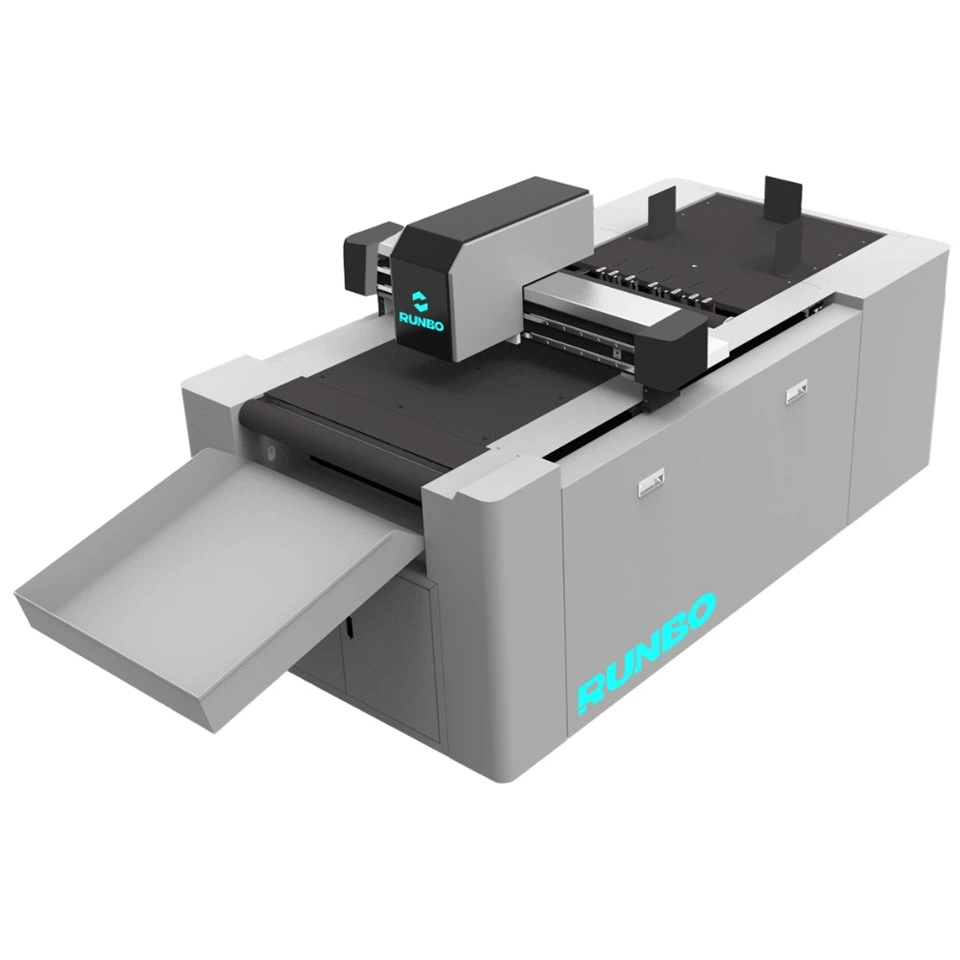
Force sensors can also be used to compensate for variations in the cutting force. Different materials require different cutting forces, and if the force is too high or too low, it can lead to inaccurate cuts. By using force sensors, the machine can adjust the cutting force in real - time to ensure that it is optimal for the material being cut.
5. Material - specific Compensation
Different materials have different properties, and this can affect the cutting accuracy. For example, soft materials like foam or rubber can be more difficult to cut accurately than hard materials like metal or plastic. To compensate for these differences, the machine can use material - specific compensation methods.
For soft materials, the cutting speed may need to be reduced to prevent the material from being deformed during the cutting process. The software can also adjust the cutting pressure to ensure that the material is held firmly in place without being damaged. For hard materials, the cutting blade may need to be more durable, and the feed rate may need to be adjusted to ensure that the blade doesn't overheat.
In conclusion, achieving high cutting accuracy with a Universal - type Cutting Machine requires a combination of software - based compensation, mechanical adjustment, calibration, sensor - based compensation, and material - specific compensation. By implementing these methods, you can ensure that your machine produces accurate and high - quality cuts every time.
If you're in the market for a Universal - type Cutting Machine or if you're looking to improve the cutting accuracy of your existing machine, I'd love to have a chat with you. We can discuss your specific requirements and I can provide you with more detailed information on our products and services. Don't hesitate to reach out for a purchase negotiation.
References
- Cutting Machine Technology Handbook
- Precision Manufacturing and Cutting Processes Research Papers


