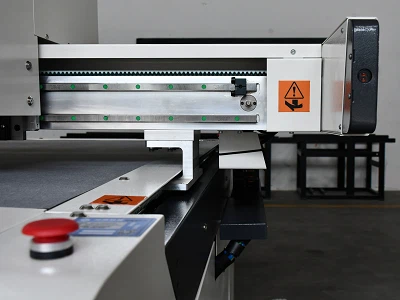
Choosing the right leather cutting machine is a strategic decision that directly affects production efficiency, cutting accuracy, labor cost, and long-term competitiveness for any leather-related business. From small workshops making custom leather goods to large manufacturing plants producing shoes, bags, automotive interiors, furniture, and industrial products, the correct cutting system determines how fast and how well you can respond to market demands.
This comprehensive guide provides an in-depth explanation of how to choose the most suitable leather cutting machine based on material characteristics, production needs, technology options, and budget considerations.
1. Understanding Your Leather Material Types
Before choosing a cutting machine, you must have a clear understanding of the materials you work with:
1.1 Genuine Leather (Cowhide, Sheepskin, Pigskin, etc.)
Natural leather has irregular shapes, varying thickness, and surface defects. It requires:
Strong cutting force
High-precision positioning
Visual recognition systems for defect avoidance
1.2 Artificial Leather (PU, PVC, Microfiber)
Artificial leather is more uniform and easier to cut, making it suitable for:
High-speed oscillating knife cutting
Rotary knife cutting for continuous straight lines
Large-batch production with fewer technical requirements
1.3 Thick Leather for Safety Shoes, Belts, Saddles
Thick or rigid leather requires:
Heavy-duty oscillating knives
Pneumatic oscillating knives with large amplitude
Higher motor torque and robust tool pressure
1.4 Soft Leather for Fashion Goods or Car Interiors
Soft leather should be cut with:
Low-vibration oscillating knives
Smooth cutting trajectories
Intelligent nesting to reduce waste
Understanding these categories helps narrow down machine configurations.
2. Identifying Production Scale and Output Requirements
Cutting machine selection is closely related to your production demands.
2.1 Small Workshops / Studios
Lower output
Custom or diverse product types
Need flexibility rather than raw speed
Recommended:
Desktop cutters, small flatbed digital cutters, or single-head oscillating knife cutters.
2.2 Medium-Sized Factories
Moderate output
Need stable accuracy and reasonable speed
Must handle multiple material types
Recommended:
Single-head or dual-head digital cutters, with optional vision system and conveyor belt.
2.3 Large Manufacturing Plants
High output, fast cycle times
Need automated feeding, nesting, and sorting
Multi-layer cutting is essential
Recommended:
Industrial-grade cutting systems, including:
Dual-head machines
Conveyorized automatic feeding
Full-vision scanning systems
Multi-layer compression cutting
3. Key Machine Types for Leather Cutting
3.1 Oscillating Knife Cutting Machine
Oscillating knives use high-frequency vibration to cut leather with clean edges.
Advantages:
Non-burning, no yellowing
Supports thick or soft leather
High cutting precision
Versatile for many industries
Best for:
Shoes, bags, upholstery leather, automotive interiors, leather crafts.
3.2 Pneumatic Oscillating Knife
Driven by compressed air, providing stronger cutting force.
Advantages:
Larger vibration amplitude
Suitable for thick, rigid leather
More durable for heavy-duty production
3.3 Rotary Knife Cutter
A round blade spinning at high speed.
Advantages:
Extremely fast cutting
Smooth edges
Perfect for long straight lines and curves without small angles
Best for:
Carpet, textiles, synthetic leather, and automotive fabrics.
3.4 Laser Cutting Machine
Not recommended for genuine leather due to charring and burnt smell.
Only suitable for:
Thin PU
Decorative leather patterns
Engraving work
4. Essential Features to Consider
4.1 Cutting Accuracy
Higher accuracy is needed for:
High-end bags
Footwear with complex patterns
Automotive interiors requiring strict tolerances
4.2 Cutting Speed
Speed matters for:
Mass production
Multi-layer cutting
Large furniture or automotive factories
4.3 Tool Compatibility
A machine should support multiple tools:
Oscillating knife
Pneumatic knife
Rotary knife
Punching tools
Creasing tools
5. Automation Features that Boost Efficiency
5.1 Automatic Feeding Conveyor
Continuous feeding eliminates manual repositioning.
5.2 Vision Recognition System
Cameras detect leather defects and contour outlines, maximizing material utilization.
5.3 Automatic Nesting Software
An intelligent nesting system reduces leather waste by up to 15–25%.
5.4 Dust / Waste Collection Systems
Keeping the platform clean enhances continuous cutting efficiency.
6. Budget Considerations
Entry-level Machines:
For small studios:
Affordable
Good precision
Lower automation
Mid-range Machines:
For growing factories:
Better speed
Improved precision
Optional vision system
High-end Industrial Machines:
For major manufacturers:
Full automation
Dual-head cutting
Maximum efficiency
7. After-Sales Support & Maintenance
A reliable cutting machine must come with:
Global technical support
Easy-to-replace consumables
Stable system software
Long-term spare parts supply
A machine is only as good as its long-term service.
Conclusion
Choosing the right leather cutting machine requires evaluating materials, production scale, cutting technologies, automation requirements, and long-term cost-efficiency. By fully understanding these factors, any business-regardless of size-can greatly improve precision, reduce waste, and expand production capacity.
A well-selected cutting machine is not just equipment; it is an investment in the future of your manufacturing capability.