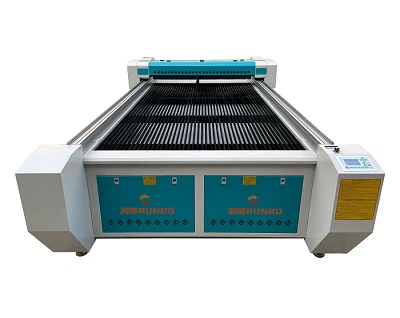
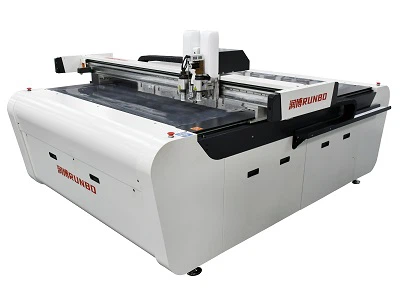
A cutting machine is one of the most essential pieces of equipment in modern manufacturing, advertising production, textile processing, and packaging prototyping. Whether it is a CNC digital cutting machine, an oscillating knife cutter, a laser cutter, or a traditional blade-cutting system, all cutting machines operate through a combination of mechanical motion, electronic control, and software-driven logic. Although the design and complexity of cutting machines vary across industries, the fundamental working principles share many similarities.
This article provides a comprehensive explanation of the working principles of cutting machines, including their structural components, cutting tools, motion control systems, driving mechanisms, and material-handling processes. By understanding these principles, users can operate cutting machines more efficiently, improve cutting quality, reduce production costs, and enhance workflow performance.
1. Overview of Cutting Machine Operation
The basic principle of any cutting machine is to apply mechanical, thermal, or kinetic force onto a material to separate it along a predefined path. CNC digital cutting machines rely mainly on mechanical blades, while laser cutters rely on thermal energy. Regardless of the method, the workflow generally includes:
Inputting or importing a design
Converting the design into cutting paths
Executing motion commands through motors
Applying cutting force via the selected tool
Completing the separation of material
Collecting or ejecting the finished pieces
These steps ensure consistency, precision, and repeatability across multiple production cycles.
2. Structural Components of a Cutting Machine
A cutting machine typically consists of the following key components:
(1) Cutting Table / Working Platform
The working platform supports the material during cutting. CNC machines often include a vacuum adsorption system to keep materials perfectly still.
(2) Motion Control System
This includes linear guide rails, servo motors, stepper motors, and belt drive systems responsible for X-axis and Y-axis movements.
(3) Tool Head / Cutting Head
The tool head houses various cutting implements such as:
Oscillating knife
Drag knife
V-cut knife
Kiss-cut tool
Milling cutter
Creasing wheel
The type of tool depends on the material and application.
(4) Control Panel and Embedded System
This unit receives design commands and executes them through precise motor coordination.
(5) Software System
Software converts graphics (AI, DXF, PLT, PDF) into machine-readable paths and determines cutting speed, depth, and tool selection.
These components work together to make the cutting machine a fully integrated intelligent device.
3. Motion Control Principles
The motion control system drives the cutting head to move in two or three dimensions. Its principle includes:
Servo Motor Control
Servo motors provide:
High precision
High torque
Real-time feedback
Stable acceleration and deceleration
They ensure cutting lines are smooth and free from vibration.
Guide Rail System
Linear guide rails maintain smooth mechanical motion. High-quality rails reduce friction and maintain cutting accuracy even at high speeds.
Transmission System
This usually consists of:
Synchronous belts
Ball screws
Gear racks
These components transfer motor torque to the cutting head for highly controlled positioning.
Together, they allow the cutting machine to execute complex shapes with consistency and speed.
4. Cutting Tools and Their Working Mechanisms
Different cutting machines use different principles:
(1) Oscillating Knife Cutting
The oscillating knife vibrates at high frequency (up to thousands of strokes per minute), forming vertical cuts without burning the material.
Ideal for:
KT board
Foam
Leather
Thick paper
Fabric
(2) Drag Knife Cutting
The blade rotates freely and is pulled along the path.
Ideal for:
Vinyl
Film
Stickers
(3) V-Cut Knife
Used to create beveled edges for display boards or packaging prototypes.
(4) Laser Cutting
Laser cutters use high-temperature beams to melt or burn the material.
Ideal for:
Acrylic
Wood
Thin metals
(5) Milling Cutter
Used for engraving or cutting hard materials like acrylic or soft aluminum sheet.
The diversity of cutting tools is what enables CNC cutting machines to serve multiple industries.
5. Working Principles of Digital Control Systems
Digital cutting machines rely on CNC systems (Computer Numerical Control). The working principle includes:
Importing design files
Software converts graphics into G-code
Controller interprets G-code
Servo motors respond to commands
Cutting head follows the defined path
Sensors monitor cutting accuracy
This digital control ensures consistency, even during long production cycles.
6. Material Fixation and Handling Mechanism
To ensure accurate cutting, materials must remain stable.
Vacuum Suction System
Most digital cutters employ a vacuum table that uses negative pressure to hold materials firmly.
Automatic Feeding System
Large production lines use:
Conveyor belts
Roll-feeding systems
Automatic collecting modules
These ensure that materials move smoothly through the machine.
7. Intelligent Recognition and Vision Positioning
Modern cutting machines often include:
CCD Camera System
Used to:
Scan printed patterns
Automatically identify registration marks
Correct deviation
Align cutting paths precisely
This eliminates manual alignment errors, especially useful for printing and packaging industries.
8. Cutting Speed, Force, and Depth Control
Cutting effectiveness depends on three major parameters:
Cutting Speed
Determines how fast the blade moves along the path.
Cutting Force
Controls how strongly the blade presses into the material.
Cutting Depth
Prevents over-cutting or under-cutting, essential for kiss-cutting or layered materials.
The machine automatically adjusts these parameters based on the loaded tool and material type.
9. Safety and Protection Mechanismsa
Cutting machines incorporate several safety systems:
Emergency stop
Blade guard
Overload protection
Motor overheating protection
Automatic error detection
These ensure safe operation even in busy production environments.
10. Conclusion
The working principle of a cutting machine combines mechanical engineering, electronics, software automation, and intelligent sensor systems. Through a blend of motion control, blade mechanics, visual recognition, and digital computing, cutting machines achieve high precision, high speed, and high reliability. Understanding these principles not only helps operators use the machine more effectively but also enhances production quality, efficiency, and long-term stability.
As industries continue to shift toward automation and smart manufacturing, cutting machines will remain a crucial part of modern production ecosystems, supporting businesses across advertising, packaging, textiles, automotive, electronics, and more.