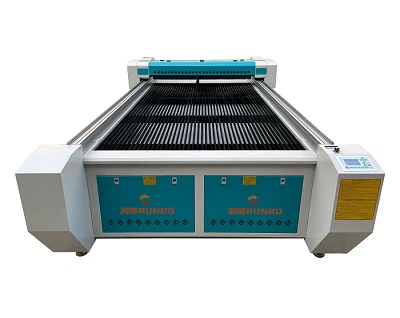
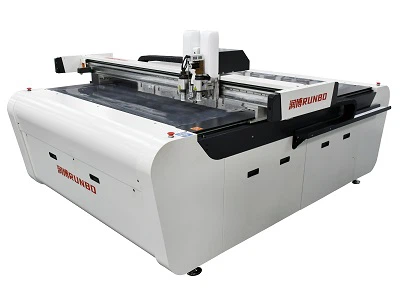
In recent years, the manufacturing and advertising industries have entered a new stage of technological transformation. As product customization becomes more mainstream and production cycles become shorter, traditional cutting methods can no longer meet modern requirements for efficiency, precision, and flexibility. Against this backdrop, CNC digital intelligent cutting machines have rapidly emerged as an indispensable tool across multiple industries, ranging from advertising materials, packaging, textiles, automotive interiors, composites, leather goods, and beyond.
A CNC digital intelligent cutting machine integrates computer numerical control technology, advanced motion systems, intelligent sensors, and cutting tools such as oscillating knives, drag knives, milling cutters, kiss-cut tools, V-cut tools, and creasing wheels. This combination enables high-precision, automated, and multi-material cutting. Below, we explore the major advantages that make CNC digital cutting machines a transformative force in modern production.
1. High-Precision Cutting for Professional Results
One of the most significant advantages of a CNC digital intelligent cutting machine is its exceptional cutting accuracy. High-precision servo motors, imported linear guides, and intelligent algorithms work together to ensure consistent cutting quality even during high-speed operation.
Key Precision Benefits:
Cutting accuracy can reach ±0.1 mm or better
Stable performance during long production cycles
Perfect for detailed patterns, sharp angles, and fine graphics
Superior to manual cutting and traditional die-cutting inconsistency
For industries such as advertising, packaging prototypes, and model design, accuracy is essential. A CNC digital cutting machine ensures that every detail is faithfully reproduced, greatly reducing material waste caused by human error.
2. Full Automation and Intelligent Workflow
CNC cutting machines do not simply cut-they think. Through integrated cameras, CCD positioning systems, automatic contour recognition, and software-based nesting, the entire cutting workflow can be fully automated.
Intelligent Functions Include:
Automatic image recognition
CCD camera for precise printing alignment
Automatic tool selection
Automatic material feeding and collecting
Intelligent path optimization to increase cutting speed
This allows factories to minimize manual intervention, reduce labor costs, and significantly improve production efficiency.
3. Versatile Multi-Material Cutting Capabilities
A major advantage of CNC digital cutting machines is their ability to cut a wide range of materials with a single device. Unlike laser cutting machines, they do not burn or discolor materials, making them ideal for industries that require clean edges.
Commonly Supported Materials:
Acrylic sheets
KT board / foam board
PVC board
Honeycomb cardboard
Leather
Textiles and fabrics
Rubber materials
Composite materials (such as carbon fiber sheet)
Oil painting canvas and photo paper
Adhesive vinyl
EVA foam
This versatility gives companies tremendous flexibility. Whether you are producing advertising displays, packaging prototypes, textile patterns, or industrial gasket components, one CNC cutting machine can do it all.
4. No Need for Molds - Rapid Production and Prototyping
Traditional die-cutting requires manufacturing molds, which is slow, expensive, and unsuitable for small-batch or custom orders. CNC digital cutting machines eliminate molds entirely.
Advantages Over Die-Cutting:
No mold cost
No waiting time for mold production
Perfect for one-piece customization
Easily handle large-scale production as well
Faster prototyping cycle for design companies
In the advertising industry where every order is unique, mold-free rapid production provides unmatched competitiveness.
5. Energy-Efficient and Environment-Friendly
Compared to laser systems, oscillating-knife CNC cutting machines:
Consume significantly less energy
Generate no toxic fumes
Do not burn materials
Produce minimal noise
Require no special ventilation
This makes them safe for indoor use and compliant with green manufacturing requirements.
6. Cost-Effective and Low Maintenance
Because CNC digital cutting machines use mechanical blades rather than lasers, their operational costs are far lower.
Cost Benefits:
Low energy consumption
Affordable replacement blades
Minimal maintenance
Longer equipment lifespan
For companies seeking long-term investment value, CNC cutting machines provide a stable, economical cutting solution.
7. User-Friendly Operation With Intelligent Software
Even operators with minimal experience can learn to use the machine quickly thanks to its intuitive software and touch-screen interface.
Software Advantages:
Supports mainstream design file formats (AI, PLT, DXF, PDF)
Automatic curve smoothing
Smart error correction
Built-in cutting templates
Easy parameter adjustments
This reduces training time and makes the machine suitable for any size of enterprise.
8. Faster Production with High Cutting Speed
Equipped with high-frequency oscillating knives, vacuum suction tables, and efficient servo motors, CNC cutting machines can achieve extremely fast cutting speeds.
Cutting Advantages:
Smooth motion control
Consistent high-speed performance
No deformation of materials during cutting
Capable of continuous 24-hour operation
For many materials, such as trampoline fabric or foam boards, a single sheet can be cut in as little as 10 seconds, allowing factories to handle urgent orders easily.
Conclusion
CNC digital intelligent cutting machines are not only a technological advancement but also a strategic advantage for businesses in modern manufacturing. They combine precision, automation, versatility, and cost efficiency in one powerful system. For industries requiring fast production, multi-material processing, and high customization, the CNC digital intelligent cutting machine is an essential solution for improving productivity and maintaining competitiveness in today's market.
As the demand for digitalization and intelligent manufacturing continues to grow, CNC digital cutting machines will play an increasingly important role across multiple industries-helping companies transform efficiency, reduce costs, and embrace the next era of smart production.